Poker Psychology. More Than Just a Game
The man, the legend, the creator, THE RAT
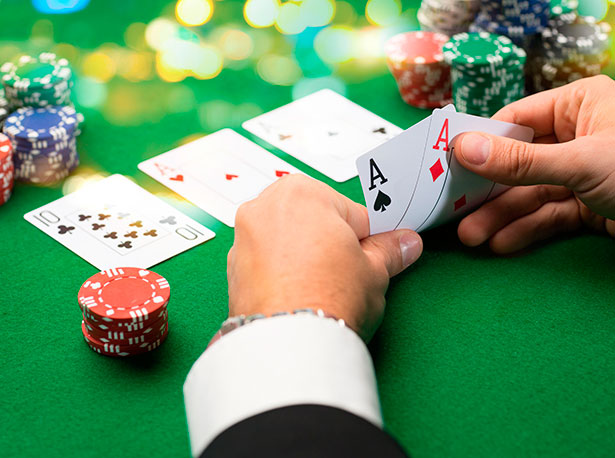
Poker’s reputation is ambiguous. Whether a game of chance or an exciting sport ‒ one way or another today poker is becoming one of the most popular entertainment. Without rush to the game, I believe, you can learn an extraordinary amount about yourself, others, and about life.
Indeed, this game is special. Some games are strategy-based, i.e chess. In others, chance determines everything, this is how slot machines are arranged. The third type ‒ where to win you need to guess the opponent's intentions, as in the children's game "rock, paper, scissors." And poker connects all these types of games. Success depends simultaneously on strategy, chance, and the ability to bluff. For those who need bright emotions and are prone to adventures, poker brings real pleasure.
Of course, it owes some of its success to the media, which turned poker into the new American Dream. Newspapers and magazines, TV shows, and even entire TV channels regularly talk about players who, participating in online tournaments, won small amounts, and then suddenly became millionaires. In a sense, poker today is a new metaphor for the struggle for a better place in life: more and more young people see this game as a chance to earn their first "serious" money. A beginner can beat a venerable pro. Unpredictability is what sets poker apart from many other games in the first place.
Calculation and luck coexist organically here, and this makes the game exciting.
"Always keep a sober head, do not get angry from failures, do not attempt at any cost to override the one who angers you in something."
Poker has many varieties and is played all over the world ‒ both live, in poker clubs or at home with friends and online, on the Internet. This game is intellectual, and therefore elite, it is on a par with hobbies such as golf, cricket, yachting. Politicians, diplomats, businessmen willingly spend time at the card table. And everyone finds something of their own in poker. Actors ‒ the use of their talents, athletes ‒ passion, writers ‒ the opportunity to observe the behavior of other people.
Moreover, poker is taught in schools! According to the teacher of one of the Parisian schools Jean-Marc Chicco, who introduced an hour of weekly practice in this discipline in his class, poker helps 10-12-year-old students to overcome anxiety, become more patient, develop logic, deductive thinking, and mathematical abilities. On the other side of the Atlantic Ocean, the importance of studying poker in the modern world is championed by Charles Nesson, a professor at Harvard University (USA), together with the student organization GPSTS. What lessons does poker teach?
Lesson 1: Learn, Learn, and Learn
At first, the rules of the game seem to be very simple. You need to collect a combination of five cards ‒ better than your opponent, and thus take the bank, which includes all the players' bets. Or, if it is impossible to win, exit the game with the least loss. These rules can be learned in ten minutes ‒ and then sit down to play and enjoy the first games. And at the same time, you have to study them all your life, apply new strategies, master other varieties of the game: staying at the same level, you will inevitably start to lose. This game teaches patience, making quick optimal decisions, trains endurance (emotional and physical), observation, memory, logic, intuition. But it takes time to develop these qualities to perfection.
When playing poker, you have to deal with a variety of information: constantly calculating the probabilities (how great are my chances of winning with such cards?). And at the same time pondering the opponent's moves, observing his facial expressions and gestures. Games can last for several hours, and this requires concentration, fluency in playing technique, and self-control. To be successful, you need not only to build a strategy and tactics for your own game, but also to change them, adjusting to other players, to be plastic, and this also needs to be learned.
Lesson 2: Accepting Others as They Are
At the poker school, we were told that we should look at our cards at the end, first, we need to look at the cards of our opponents (if possible) and, most importantly, evaluate their reaction to the game: carefully look at their gestures, facial expressions, and trust that you see, not what they say. The main component of success is the ability to “read” people.
People who are very different (in terms of the level of play and types of characters) gather at the gambling table. These can be eight experienced players and two beginners, and these two are especially dangerous, as they can start playing without conforming to the cards in their hands. In this case, other players have to act based not on the logic of poker, but on the idea of how beginners see their next move. Haircuts, hand movements, and even a watch brand all help rivals understand each other. In a sense, poker forces players to develop the ability to empathize, although in this case, they are pursuing a not very noble goal, since understanding the other in poker is necessary to defeat him as soon as possible.
Poker is a great training that teaches you to read the emotions and behavior of others and accept people as they are, even if only to recognize when opponents are bluffing, and more confidently bluffing ourselves.
(Un)Random Wins
Does poker win more depend on skill or chance? As much as we would like to rely on fortune's favor, mathematicians have proven that success is directly related to the skill.
This conclusion may change the legislation of some countries that define poker as one of the dangerous games of chance and will allow it to join the family of logic games that are officially recognized by the IOC as sports: chess, checkers, the card game bridge and Go. For three months, mathematicians from the Hamburg Institute of Law and Economics (Germany) documented all online games of Texas Hold'em ‒ the most popular form of poker on the Internet. After analyzing the game results of 55 thousand people, they came to the conclusion that fortune smiles more often at those who played at least a thousand combinations (which corresponds to about 33 hours of "live" play or 13 hours of online play, where the game always goes faster).
This conclusion is confirmed by the research of Sean McCulloch, a computer systems specialist at Ohio University (USA). After evaluating more than 100 million poker games on the Internet, he concluded that only 24% of them end with a showdown (and then the one with the most successful hand wins). In all other cases, the most experienced player wins.
Lesson 3: Mastering Yourself
The best way to understand another is to learn to understand and feel. During the game, you have to control yourself all the time: to restrain joy when an excellent combination falls out, to be confident and calm in case of a bad game. Self-control and psychological stability are the most important qualities of a successful player. Poker teaches "to always keep a sober head, not to get turned on by failures, not to try to outplay the one who made you angry."
Lesson 4: Getting Up After Falling
“On the eighth minute I lost all my big chips,” recalls one player Igor Kurganov. “Out of boredom, I started playing bad cards ‒ I started taking less risks. And slowly leveled off. And so I became the winner." This is the piquancy of poker. You can be an inexperienced player and, like Igor, win a tournament and, conversely, master the art of bluffing perfectly, have the best possible set of cards in your hands, play brilliantly ... and still lose. As a result, for example, a bad beat, which all players are afraid of, is when the opponent, contrary to all probabilistic layouts, unexpectedly receives exactly those cards that bring him victory.
It is difficult to endure defeat, especially if you consider yourself invincible; it is not easy to keep playing after losing (as well as winning) a lot of money. But poker teaches players to rise after a fall. In the game, as in life, some complain that they are not lucky and those who take responsibility. Some refer to fortune (largely in order not to question their actions); others put even more effort and tend to be successful.
Lesson 5: Right Attitude to Money
“Poker is a great opportunity to explore your relationship with money. In particular, it teaches not to overestimate the role of money in life and to structure your time. You can generally play not for money, including on the Internet. You get pleasure not from the money you won, but from the fact that you win. And yet, when the chips have no value, then the strategy of the game changes, the excitement goes away, the courage is lost. Therefore, many poker lovers, to be able to play for money and at the same time not spend all their earnings on the game, create a certain cash reserve for the game, known as a bankroll. For one night of the game, they buy chips, for example, ten dollars; if they win, they will be able to get from twenty to thirty dollars, while losing, they will spend an amount comparable to the price of a movie ticket. Winnings add to the bankroll: it becomes a gold reserve that grows as the game of its owner improves. As a result, the player gets the opportunity to participate in more expensive tournaments, where the winnings, respectively, can be large.”
“It's easy to learn the rules, but you have to study them all your life: staying on the same level, you will inevitably start to lose.”
Another way to control your finances is to set a boundary for yourself that cannot be crossed from the very beginning, and after a year evaluate your profits and losses, and only after that make a decision about where and how to play next.
Is there a risk of addiction?
Gambling and luck are the main prerequisites for a painful addiction to any game. The player will forever remember this sweet feeling of luck, strive to relive it again and again, and begin to check: did fortune love him? He is losing and wants to play even more. Gradually it becomes more and more difficult for him to control himself, the desire to play becomes the only goal in life.
Therapist Marc Valleur treats those who suffer from their excessive need to play. According to him, these are, as a rule, adherents of purely gambling games (lovers of slot machines, blackjack), with whom the illusory feeling that the player can control his luck is associated. “Poker is not only a game of chance but also a strategic game, which limits the risk of addiction,” says Mark Waller. “These gamblers are more likely to have money problems than addiction: these are teenagers playing on the Internet using their parents' credit cards, and adults caught in a vicious circle: to pay off debt, they borrow money over and over again."
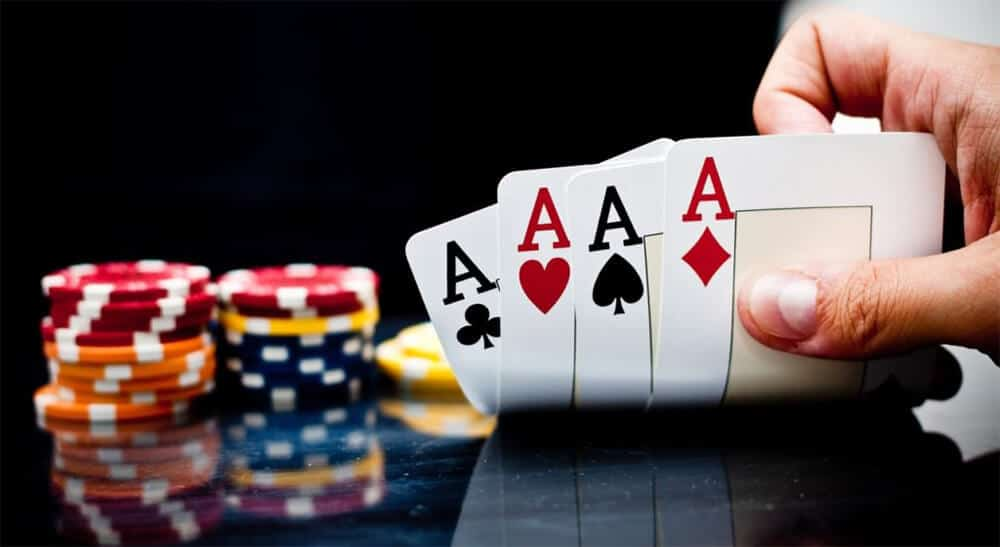
Poker is not just a game of chance, but a way to develop strategic thinking.
Let's talk more about the opinion of a person who is a professional poker player himself. Igor Kurganov is a member of Team PokerStars.
There are many parallels between playing poker and trading on the stock exchange: both of these activities require a good analytical mind, steel nerves, and tens and hundreds of hours of painstaking work on yourself and your strategy. It is not surprising that there are many poker players among traders.
One of the most successful poker players in the world from Team PokerStars Igor Kurganov revealed some psychological (and not only) secrets of his victories in an interview.
Igor, how did you become a professional poker player?
At first, I just played with friends, but during my studies at university, I had very good results in playing poker for several months. Then I wondered if I should continue to study or spend more time in poker ‒ not 20-30 hours, but 70-80 hours a week. I ended up dropping out of the Technical University of Munich after two years of study.
I continue to work on improving my education at the present time, as I believe that it is necessary to constantly improve in this direction. Now there are many courses on the Internet that allow you to learn a lot ‒ I do mathematics, programming.
The attitude towards the diploma crust is changing in the world. An example of this trend is the largest hedge fund Bridgewater, where, when hiring, they look first of all at how a person can analyze a situation.
The financial world is very interested in poker players because of their ability to make decisions not based on emotions, but based on logic and calculations. There are a lot of factors to calculate quickly.
How did your relatives feel about your choice of poker as a profession?
I left university to focus on playing poker. You can imagine how upset my parents were. They were worried that their 22-year-old son had not given enough thought to his decision. Fortunately, I was successful in poker, so now my family supports my choice. My parents dream that I will receive a mathematical education. I hope that instead, I can achieve many other goals.
Psychological preparation. How do you prepare for the game?
In poker, it is important to stay focused for hours. We sometimes sit for 8-10 hours, and when I play a live game, then 3 hours in a row. We have the biggest bets at the very end of the day, so you need to prepare well to keep a clear mind until the end of the game.
You also need to devote time to sports. I go in for fitness, visit the climbing wall with my friend, go skiing, swim, yoga also helps. I used to be an active player in football and athletics. It is important to pay attention to healthy eating so that the food is not too heavy.
Who is your poker guru? Who are you targeting? Who are you following?
Previously, I focused on others, as there were many who played better, but now I have become a strong player, so I don't have a guru, but there are players comparable in strength with whom I discuss some situations.
Tell us about your biggest loss.
It's hard to lose a lot in tournaments. Of course, it is possible if the stakes are very high, but you always know what the risk is. Dangerous situations arise when playing for money, you can get caught in a "putty" (a special condition caused by a big loss and a desire to win back, which only worsens the result of the game).
My biggest loss was several hundred thousand dollars ‒ it was half of my money invested in the game. Losing is painful, but it teaches you a lot. I had unsuccessful games before. It is important to have the experience of living without money, to find joy in something other than finance.
Where do you get money for the game?
You have your funds, you can find investors. Only a small part of the players use only their savings, most of them attract money from outside. These are not debt obligations, but private investments that can lead to either income or losses, so it is important to invest as much money as you are willing to lose. I had both Russian and foreign investors ‒ most often they are other professional players. For example, I don’t want to play for $100,000, since this requires a lot of money, so players buy out shares in the tournament: 50%, 60%, and so on. You can collect a pool of investors with the participation of 5-10%. There are many opportunities.
How do you separate sports and cheating in card games?
A casino is a big business that brings in a lot of money, so the owners of these establishments value their reputation and make sure that the game is played according to the rules ‒ there are cameras everywhere. You have to play in the official venues, so I'm glad that there is a company like PokerStars. This company has a good reputation for fair play.
Often people get angry when they lose large sums of money, but there are also winners ‒ those who received positive emotions. Any player always has a chance to win. If we sat down and played now, the probability of your winning would be about 40%, but the longer we played, the lower your chances of winning would be. This is a very democratic game, as anyone can win.
Many countries have very good data for poker, judging by other intellectual games. There can be a strong chess school, as well as many mathematicians, which is very important. Carnegie Mellon University in the USA, which specializes in teaching programming and is well known throughout the world among professionals, spent several years creating artificial intelligence that could beat a human in poker. This is similar to the story when Gary Kasparov lost in a duel with the computer Deep Blue in 1997. Back in 2014, humans could beat the computer at poker, but now $10 million worth artificial intelligence is stronger. The fact that scientists are engaged in this issue already indicates that this is not just a game of chance, but an occupation that is aimed at developing strategic thinking.
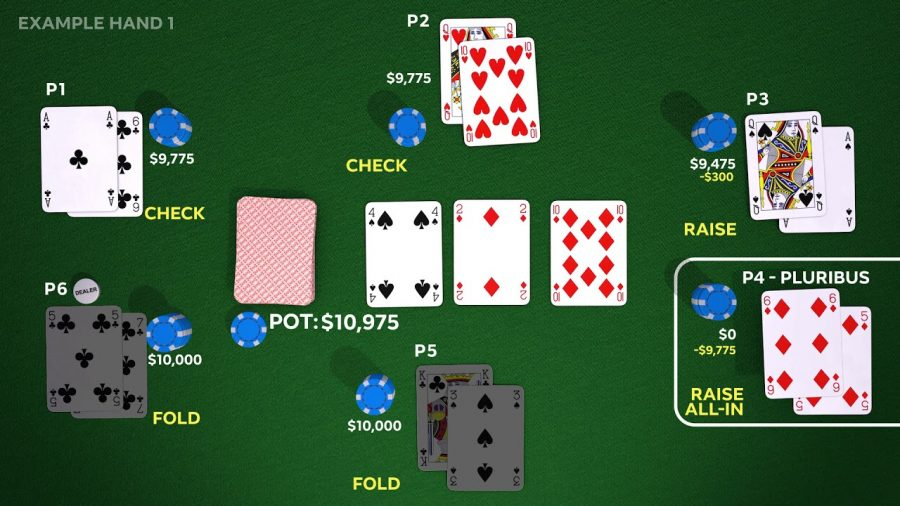
Are there any chances for human players in such a situation?
Don't worry when playing poker over the Internet that the computer will always win. Artificial intelligence technology has been created already, but so far it is too expensive for mass distribution.
PokerStars representatives and other market participants make sure that real people participate in the game, not bots.
It is worth noting that the computer was able to win only in a one-on-one game, and in games with 8-9 participants, it is much more difficult to surpass the rest, so until scientists create artificial intelligence for such situations, many more years will pass.
Tell us about the best poker moments in your life.
The most truthful answer to this question is the moment I met my friend. When I started playing, I had different periods, successful and not so, but gradually I "played out" and began to participate in tournaments with higher stakes. As a result, I managed to get participation in the tournament with a minimum entry bet of £20,000. Then I played against my good friend.
It turned out that we took first and second places, which was very pleasant. After that I played against Daniel Negreanu ‒ there were also a lot of positive emotions. These are the events of 2011-2012. I will never feel so strong emotions as it was at the very beginning of my career. I managed to win a million, but when you get it for the third time, you are not so happy. On the other hand, when you lose a lot the first time, you feel terrible, but over time you start to feel less painful about it. And in both cases, you learn to react not so emotionally.
How do you manage to earn money except for poker? Investing somewhere or just keeping in bank accounts?
I'm not ready to answer this question.
Is there an age limit in poker like in other sports?
It is important to be over 18 years old, the rest is not so important. The main thing is to be able to press the button or to say that you want someone to help. There is no other game, as it seems to me, where you can see such different people: for example, a poor man from Australia, a businesswoman from the USA, an athlete from Russia, and so on meet at the same table. If there was no interest in poker, then all these different people would never have met.
What books do you prefer to read?
I used to spend more time reading fiction books, now I tend to choose scientific literature. Of the latter, it is Daniel Kahneman "Think Slow ... Decide Fast." This work helps to better understand the processes taking place in the brain. There is also a very useful resource lesswrong.com, created by Eliezer Yudkowsky, which outlines the theory of rational thinking. On this topic, you can read "Rationality: From AI to zombies."
It is noteworthy that Yudkowsky was able to transfer his main ideas to the world of Harry Potter in the book "Harry Potter and the Methods of Rational Thinking" ‒ this is 1800 pages of exciting reading. The main character here is also 10 years old, and he considers the whole world from a scientific point of view. Usually, in order to read a book, you need to master 50-100 pages, after which you perceive a large number of pages as an opportunity to prolong the pleasure.
I also read “Sapiens. A Brief History of Humanity" by Yuval Noah Harari. I follow with interest the publications on the websites of universities and specialized blogs, for example, Wait But Why, where many current scientific topics are touched upon with a grain of humor: they write about Elon Musk's projects, as well as about artificial intelligence, and so on.
Can you give some tips for a successful poker game?
1. A good player needs experience.
2. It is useful to devote time to online classes, for example, to follow the video blogs of professional players (Jason Somerville is one of them), and read books on this topic.
3. The most important thing is practice in the online game. For starters, you can start with very small amounts or no money. Sooner or later, you will want to challenge other players.
4. Studying difficult moments of games with friends or with the computer will help improve the results of the game and hold out longer.
More in Fun
Comments (0)
No comments yet. Be first.
Log in to comment and like.